

You pull on your trousers, and the rough edge of your heel catches the fabric. Or you step onto a hard floor and feel a sharp sting from a small split you barely noticed yesterday. If you’ve been searching for “cracked heels causes”, the explanation is usually a mix of everyday habits and the way heel skin is built.
Why heel skin splits more easily than other skin
Your heels do a lot of work. They carry your body weight every time you stand, walk or climb stairs, and the skin covering them has to cope with constant pressure.
That’s why heel skin is naturally thicker than the skin on most other parts of your body.
But there’s something else that makes your heels particularly vulnerable to cracking.
Hands, feet or both: which needs attention first?
Five quick questions to see where to start.
Loading the quiz…
The soles of your feet have no oil-producing glands of their own.
Unlike many other areas of your body, the soles cannot produce natural skin oil to help keep the surface supple. They depend heavily on moisture within the skin and the strength of the outer protective layer to maintain flexibility.
When that moisture is lost, the skin becomes dry, stiff and less able to stretch.
Meanwhile, the soft pad beneath your heel spreads slightly outwards whenever your body weight presses down on it.
Healthy, flexible skin can accommodate that movement. Dry, hardened skin cannot stretch as easily.
Eventually, the pressure can cause the stiff outer layer to split, especially around the edges of the heel.
That's how a small area of dryness can develop into a visible crack.
And no, cracked heels are not a sign that your feet are unclean. They are primarily a problem involving dryness, skin flexibility and pressure.
Cracked heels rarely have just one cause, and what worked for your neighbour may do nothing for you. Feet Don't Lie is built around finding your cause first.
Open footwear and walking barefoot

Slippers, flip-flops and open sandals are part of everyday life in Nigeria, especially in hot weather.
But the way these shoes interact with your heels can contribute to cracking.
With many open-backed slippers and sandals, the heel isn't supported around its sides. When your weight presses down, the soft heel pad spreads outwards without much support from the footwear.
That outward movement puts tension on the skin around the edge of your heel.
If the skin is already dry or hardened, repeated stretching can encourage small splits to form.
Open footwear also leaves more of your heel exposed to dry air, dust and contact with rough surfaces.
Walking barefoot around the house adds another kind of pressure.
Whether you're moving across tiled floors, rough cement or an outdoor compound, the heel repeatedly meets the ground without the cushioning of footwear.
The surface underneath your feet influences how pressure is distributed.
Hard, uneven surfaces can concentrate that pressure around particular parts of the heel.
Over time, this combination of outward spreading, surface contact and dryness can make the edges of your heels more likely to crack.
Hot water and harsh soaps
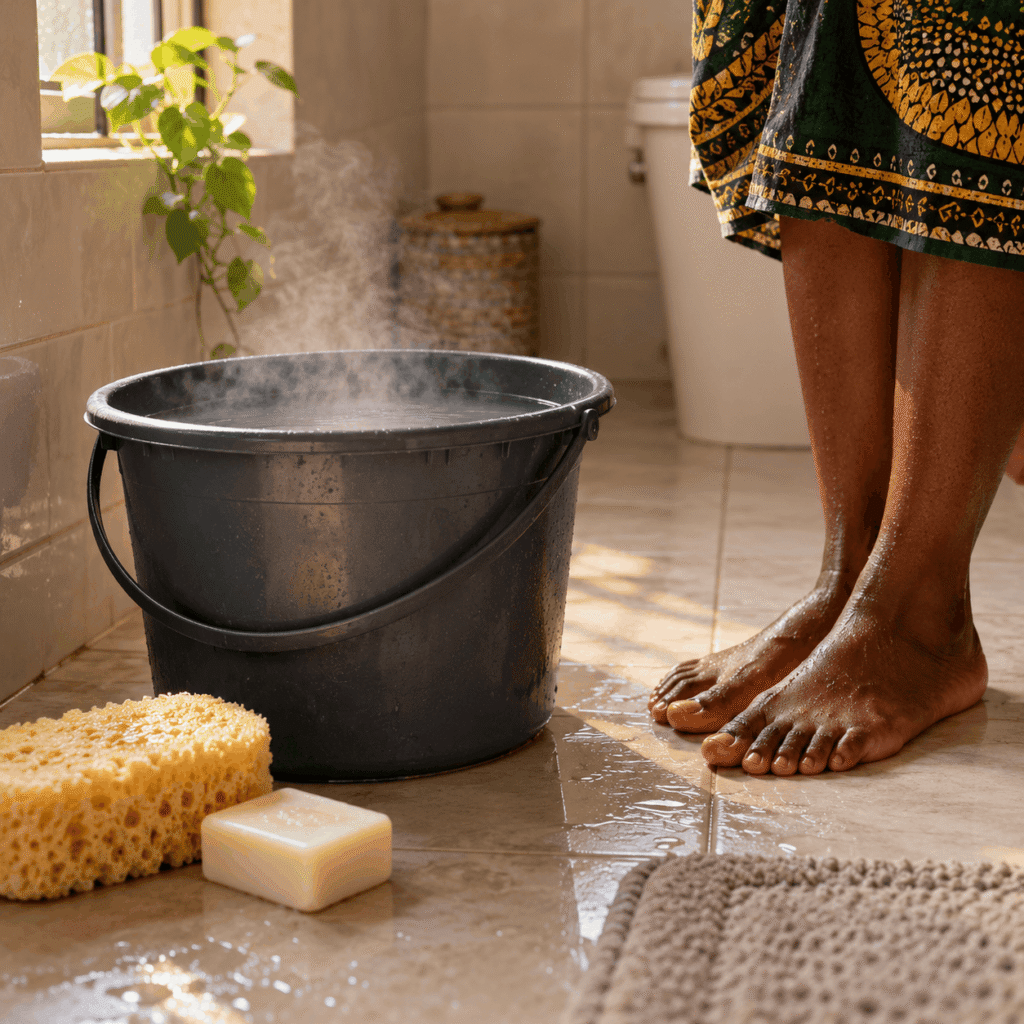
A hot bath can leave your feet feeling soft and comfortable immediately afterwards.
But that temporary softness doesn't always mean the skin has gained moisture that it can retain.
Hot water can disturb the protective outer layer of the skin, making it easier for moisture to escape.
Strong soaps may add to this effect by removing natural substances that help the skin maintain its protective barrier.
The soles don't produce their own skin oil, so this barrier is particularly important.
Long soaking can temporarily swell the outer skin cells as they absorb water. Afterwards, as that water evaporates, the surface may feel tighter and drier.
This helps explain why feet can feel soft during bathing but become rough again afterwards.
Hard water, which is common in some Nigerian homes, can also contribute to irritation and dryness. Minerals in the water may interact with cleansing products and leave residues that affect the skin's surface.
These effects don't necessarily produce visible cracks on their own.
But when the heel is already under pressure from standing and walking, repeated dryness can reduce the skin's ability to bend comfortably.
Long hours on your feet
Your heels don't experience pressure only when you're walking.
Standing for long periods also places a continuous load on the heel pad, particularly when your weight rests heavily towards the back of your feet.
This is especially relevant if your day involves working in a shop, standing at a market stall, moving around a kitchen or spending hours on hard floors.
The skin responds to repeated pressure by becoming thicker in areas that carry the greatest load.
This thickening is part of the body's natural protective response.
But thicker skin isn't automatically more flexible.
As the outer layer builds up, it may become harder and less able to stretch with the soft tissue underneath.
At the same time, your body weight continues to push the heel pad outwards whenever you stand.
The harder the skin becomes, the more tension can develop around its edges.
Concrete floors, tiles and other hard surfaces can add to the pressure because they provide little cushioning.
This is one reason painful cracked heels can affect people whose jobs involve standing for much of the day, even when they don't walk particularly long distances.
Harmattan and dry air
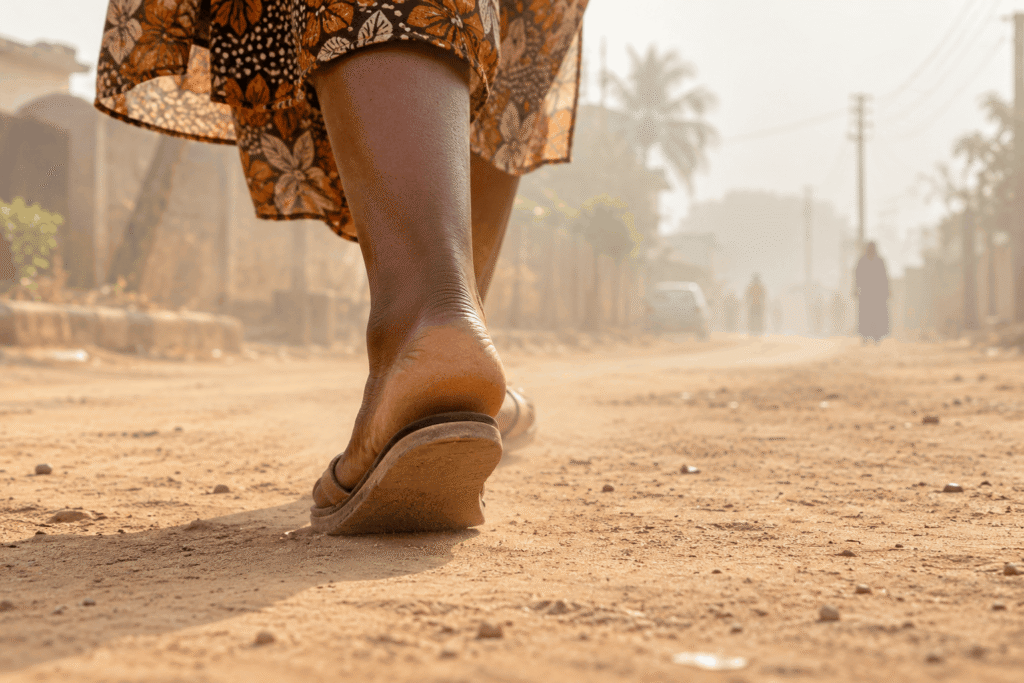
You may notice that your heels look reasonably smooth during humid months, only to become rough and uncomfortable when Harmattan arrives.
There's a reason for that change.
During Harmattan, which generally occurs between about October and February in many parts of Nigeria, humidity drops and the air becomes much drier.
Dry air encourages moisture to evaporate from the surface of your skin.
Your heels are particularly affected because their outer skin is thick, they have no oil-producing glands and they may be exposed through open footwear.
As moisture escapes, the hardened surface becomes less flexible.
Existing fine lines around the heels can become more noticeable, and areas that were already under pressure may begin to split.
Cracked heels during Harmattan are often the result of several factors becoming more significant at the same time.
Habits that didn't cause noticeable problems during humid weather may contribute to dryness when the surrounding air contains much less moisture.
This explains why the same person can experience very different heel conditions across Nigeria's changing seasons, without a major change in daily activities.
Thick, hardened skin that no longer bends
Sometimes the main problem is the hard skin itself.
Repeated pressure and dryness can cause dead skin cells to accumulate around your heels, producing thickened areas known as calluses.
These areas may appear yellowish, rough or noticeably harder than the surrounding skin.
Calluses develop because the skin is responding to pressure and rubbing. The thicker outer layer provides protection, but excessive hardening creates another problem.
Hard skin loses flexibility.
As your heel spreads beneath your body weight, the stiff outer layer struggles to move with it.
The greatest tension often develops near the boundary between the hardened area and the softer skin beside it.
That's why cracks frequently form around the outer edge of the heel rather than across the entire sole.
You can also have heels that look reasonably smooth when viewed from above but have visible splits underneath or around the sides.
These areas are easy to overlook because they aren't always visible when you're standing normally.
And a heel doesn't need to look extremely dry for hardened skin to have lost enough flexibility to crack under pressure.
Body weight, age and underlying health
Body weight affects how much pressure your heels carry.
Extra weight can increase the outward spreading of the soft heel pad, placing more tension on the skin around its edges.
Age can also contribute. As you get older, skin generally retains moisture less effectively, and oil production elsewhere on the body tends to decrease. The skin may become less supple and more prone to dryness.
Certain health conditions, including diabetes or an underactive thyroid, can also contribute to dry feet.
These factors may act alongside ordinary causes such as pressure, footwear and environmental dryness.
That's why two people with similar-looking heels may not have developed their cracks for the same reason.
Heel Risk Score
Heels crack when pressure on thick skin meets dryness. Find out how much risk your daily habits put on yours.
Loading the calculator...
Tick if this applies to you
Questions people ask about cracked heels
1. Why do my heels crack even when I wear closed shoes?
Closed shoes don't remove every source of pressure. The fit, stiffness and shape of a shoe can affect how force is distributed across your heel. Shoes that rub against particular areas may contribute to thickened skin, while the heel still carries your body weight inside the shoe. Cracking can therefore develop without direct exposure to outdoor air.
2. Why are my heels worse in the dry season?
Low humidity affects more than the surface appearance of your feet. It can change the moisture balance of the outer skin layer, making existing areas of thickened skin feel tighter. Indoor fans and dry, dusty surroundings may add to that moisture loss. This is why cracks that seemed minor during humid weather can become more noticeable in the dry season.
3. Why do cracked heels hurt more in the morning?
After your feet have been resting, the skin around an existing crack may feel relatively stiff. When you stand, your weight stretches the heel pad and can pull the edges of that crack apart. If the split reaches sensitive living skin beneath the outer layer, that movement can cause a sharp sting during your first steps.
4. Do cracked heels mean my feet are dirty?
No. Dust and dead skin can collect around an existing crack, making the area look rough or neglected, but dirt isn't what causes the skin to split. Even feet that are washed carefully can develop cracks when the skin loses flexibility under pressure. Cleanliness and the physical condition of your heel skin are two separate things.
What makes a small crack worse
A small heel crack doesn't always look serious.
It may begin as a fine line along the edge of hardened skin, with little discomfort until pressure opens it further.
The trouble starts when the surrounding skin continues to dry and harden.
As the skin loses flexibility, everyday pressure can pull the edges of the crack further apart.
That creates a pattern: dry skin develops into hard skin, pressure produces a crack, and continued pressure can make the crack deeper and more painful.
Certain habits can feed directly into this process.
Peeling or pulling off thick pieces of hard skin can tear the surrounding surface, leaving uneven areas where the skin is more vulnerable to splitting.
Scraping hardened heels with blades can remove more skin than intended, creating cuts and exposing tender tissue underneath.
Hard scrubbing creates repeated friction. That friction can irritate the surface and encourage further thickening in areas already affected by pressure.
Walking barefoot across rough floors adds physical stress directly to the cracked area.
And when a small crack remains under the same pressure that helped create it, its edges may continue separating until the split reaches more sensitive skin.
If a crack bleeds, swells, or the skin around it turns red and warm, see a doctor.
The difficult part is that cracks caused by different combinations of dryness, pressure and hardened skin can look very similar.
That's why guessing based on appearance alone can be frustrating, particularly when the same problem keeps returning.
If you're tired of trying to understand why your heels keep splitting, Feet Don't Lie takes a cause-first approach to making sense of the problem, rather than treating every rough heel as though it developed in exactly the same way.
Of these six reasons, which one sounds most familiar when you think about your own cracked heels and what your feet go through?