

Why are my knuckles dark when the rest of my hands look perfectly normal? It’s one of the most common skin complaints on the hands, and searching for dark knuckles causes can bring up explanations that sound far more worrying than they need to. The truth is that most causes of dark knuckles are ordinary, and several have to do with what your hands go through every day.
What makes knuckle skin different from the rest of your hand
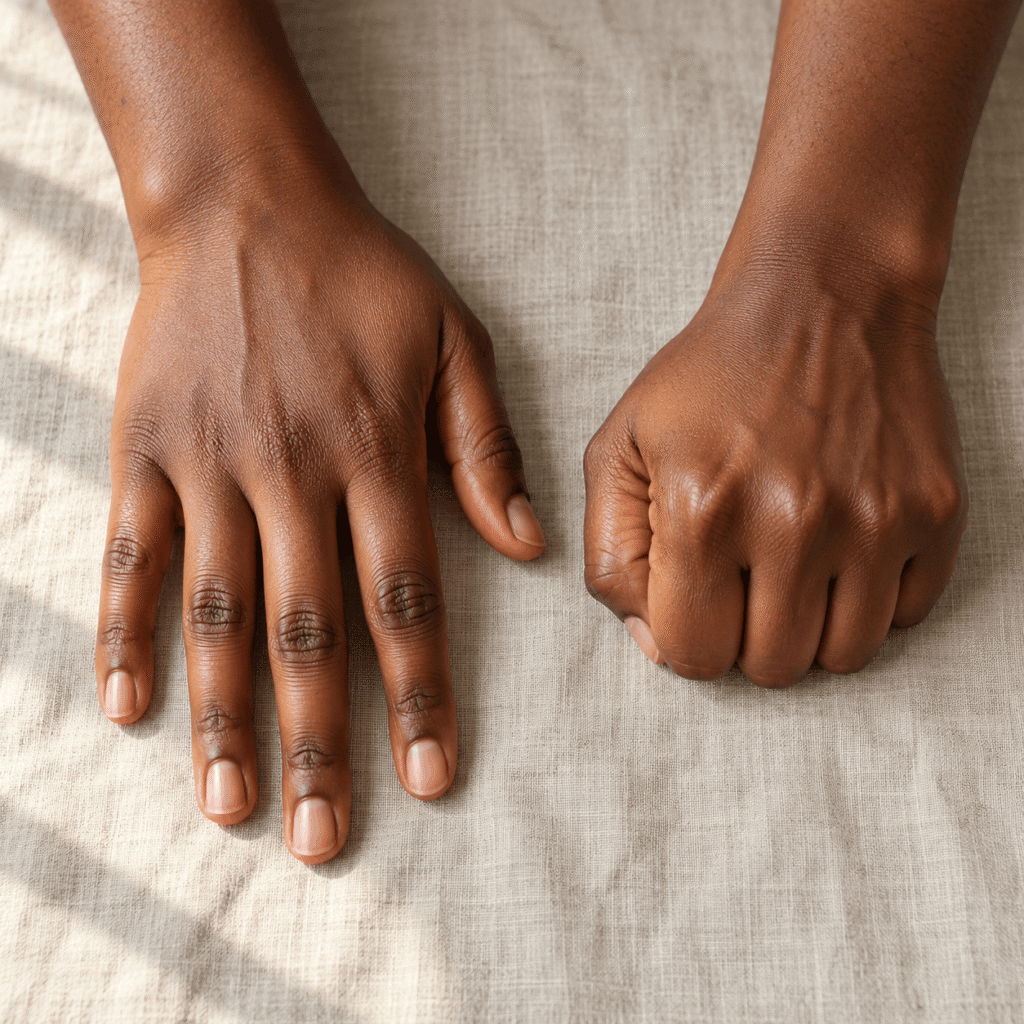
Look at the back of your hand. The skin across your fingers is fairly smooth, but the skin over your knuckles has lines, folds and creases that become more obvious when you bend your fingers.
That’s because the skin there has a different job.
It’s relatively thin, stretches whenever you move your fingers and folds back into place when you straighten them. It also sits over joints that regularly come into contact with other surfaces.
For many Nigerians, the skin over these joints naturally has a slightly richer colour than the surrounding fingers. You may have noticed this since childhood, long before you started paying attention to skincare.
A natural colour difference isn’t necessarily a problem.
What matters is understanding why that difference sometimes becomes more noticeable.
The knuckles already have a tendency to show colour changes because of their position, movement and exposure. The everyday causes below can push that natural difference further, leaving the joints visibly darker than the rest of your hands.
Friction and constant bending
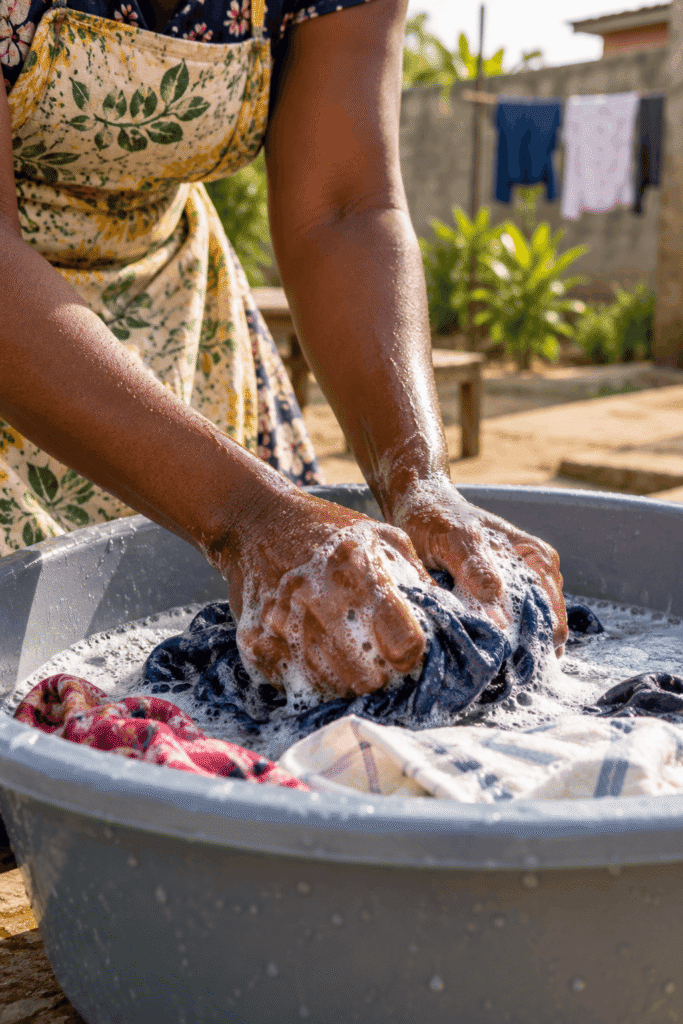
Your knuckles are involved in almost everything your hands do.
Carrying heavy shopping bags, washing clothes by hand, scrubbing pots, gripping a broom and pressing your fists against a table all put pressure on the skin around your finger joints.
Much of that pressure happens without you noticing.
Every time the skin rubs repeatedly against something, it experiences a small amount of physical stress. In response, it may gradually become thicker, particularly where the pressure is concentrated.
Repeated rubbing can also trigger the skin to produce more melanin, the natural pigment responsible for skin colour.
Melanin production is one of the ways skin responds to stress and irritation. When more pigment collects around the knuckles, those areas can become noticeably darker than the surrounding fingers.
This helps explain why darkening on fingers often appears around the joints rather than evenly across the entire hand.
It’s not necessarily about how hard you work with your hands. The kind of contact, the amount of rubbing and how your skin responds to that pressure all matter.
Sun exposure on the back of your hands

Most people think about their face when they think about sunlight. Their hands hardly get a second thought.
Yet your hands spend a surprising amount of time exposed.
During Lagos traffic, the back of your hands may face sunlight while you’re driving. Walking through an open market, holding your phone outdoors or sitting near a sunny window can also leave them exposed.
Sunlight encourages the skin to produce melanin.
This pigment helps protect the skin from some of the effects of ultraviolet radiation. With repeated exposure, pigment production can increase, making exposed areas appear darker.
The backs of your hands generally receive more sunlight than the palms or the spaces between your fingers.
Knuckles can show the difference particularly clearly because their skin already has folds, natural colour variation and frequent mechanical stress.
Sun exposure may not be the only reason your knuckles have darkened, but it can add to changes that are already happening.
Dryness and harsh handwashing

Dryness is another common reason knuckles become darker, especially when the skin is repeatedly irritated.
Your hands deal with soap, water, detergent and cleaning products throughout the day. And the knuckles, with all their folds and movement, can be particularly affected.
Hot water and strong soaps remove some of the natural oils that help the skin hold on to moisture.
Detergents can disturb the skin’s protective outer layer, while frequent contact with alcohol-based hand sanitiser may add to dryness and irritation.
When that outer layer becomes irritated, the skin can respond by producing extra pigment.
This is called post-inflammatory hyperpigmentation. It simply means the skin becomes darker following irritation or inflammation.
Skin that makes a lot of melanin can respond particularly strongly to this kind of irritation, even when the initial irritation doesn’t look dramatic.
The roughness and dryness may be easy to notice, while the gradual colour change is less obvious until the knuckles begin to look noticeably different.
If your hands take a daily beating from washing, housework and constant contact with cleaning products, Hands Don’t Lie explores that side of the problem in greater detail.
Dark knuckles can come from friction, sun, dryness or something else, and each one needs a different plan. The Natural Toning Guide is where you find out which one is yours.
Other causes that sit beneath the surface
Not every colour change starts with something touching your hands.
Family history can influence the natural distribution of pigment around your joints. Hormonal changes and insulin resistance are other possible contributors, although these are less common explanations than friction, sunlight and dryness.
These underlying factors matter because the appearance of the skin doesn’t always reveal the reason behind the darkening.
Two people may have knuckles that look almost identical, even though the causes are completely unrelated.
It’s also possible for an inherited tendency towards darker joints to exist alongside everyday irritation.
That combination can make the difference between the knuckles and surrounding fingers more noticeable.
Why scrubbing and strong products make knuckles worse
Dark knuckles can be frustrating because the colour often looks concentrated in one small area.
That makes aggressive scrubbing seem reasonable. The assumption is that if the darker colour is sitting on the surface, enough rubbing should remove it.
But hyperpigmentation isn’t dirt.
When the skin produces extra melanin, that pigment exists within the skin itself. It isn’t simply something resting on top that can be washed away.
Hard scrubbing adds more friction to an area that may already be reacting to repeated rubbing.
That extra irritation can encourage further pigment production, making the knuckles look darker rather than lighter.
Strong bleaching-type creams create a different problem.
The relatively thin skin over the joints may become irritated by harsh formulations. At the same time, the surrounding skin may respond differently from the knuckles.
This can create patchy results, where the skin around the joints changes colour while the knuckles remain noticeably darker.
The contrast may become more obvious than it was before.
The problem isn’t always that the skin is difficult to change. Sometimes the original cause of the darkening is still present, while the irritation from aggressive products adds another reason for the skin to produce pigment.
Myths about dark knuckles
There’s plenty of misleading information about dark knuckles, especially when people assume every colour difference has the same explanation.
Myth 1: Dark knuckles mean poor hygiene.
Dark knuckles aren’t evidence that your hands are dirty. Pigment changes caused by friction, sunlight, natural colour variation or irritation have little to do with cleanliness, so the appearance of your joints tells people nothing reliable about your personal hygiene.
Myth 2: Dark knuckles always mean something is wrong with your health.
Although certain underlying factors can influence pigmentation, most everyday cases have much simpler explanations. The fact that your knuckles are darker doesn’t automatically mean there’s a problem inside your body, particularly when the colour difference has been present for a long time.
Myth 3: Scrubbing harder removes it.
Scrubbing may remove loose surface skin, but that doesn’t mean it removes the pigment responsible for dark knuckles. Excessive rubbing can create additional irritation, encouraging the very darkening you’re concerned about.
Myth 4: What worked for your friend will work for you.
Your friend’s dark knuckles may have developed for a completely different reason. Similar-looking pigmentation doesn’t prove that the underlying cause is the same, which is why copying someone else’s approach can be disappointing or even aggravate the problem.
Why the cause matters more than the product
Here’s what makes dark knuckles so confusing.
One person’s knuckles may become darker mainly because of constant rubbing. Another person’s may be affected more by sunlight. For someone else, dryness and irritation may be the biggest contributors.
And sometimes all three are involved.
On the surface, the darkening may look almost identical.
That’s why choosing a product based only on how your knuckles look is a guess.
A product cannot tell you whether the extra pigment developed because of repeated friction, exposure to sunlight or irritation from everyday handwashing.
Why is your skin darker in some areas?
Five quick questions to help you understand what is behind your dark areas.
Loading the quiz…
And when the cause is misunderstood, the wrong approach can waste time or create more irritation.
Understanding the cause comes before choosing a plan.
The order matters because different causes involve different processes in the skin. Something aimed at one process may have little connection to another.
That's the thinking behind The Natural Toning Guide + 5 Bonuses. It walks you through understanding the cause and following a plan in the right order, rather than making random skincare decisions based on appearances alone.
Common questions about dark knuckles
1. Are dark knuckles normal?
Yes. A slight difference between the colour of your knuckles and the surrounding fingers can be completely natural. Some people have more pigment around their finger joints from childhood, without any particular event causing it. The appearance of your knuckles alone doesn't determine whether the colour is unusual for you.
2. Why are only my knuckles dark and not the rest of my fingers?
The skin over your knuckles experiences a different kind of pressure from the skin along your fingers. It bends, folds and presses against surfaces more directly. These local differences can influence skin thickness and pigment production, so darkening doesn't necessarily spread evenly across the entire finger.
3. Can dark knuckles run in families?
Yes. Your genes help influence how pigment is distributed across your body, including around joints. You might notice that your parents or siblings have a similar natural colour difference. Shared household habits can also contribute to similarities, so resemblance within a family doesn't automatically mean genetics explains everything.
4. Do dark knuckles mean something is wrong with my health?
Not necessarily. Dark knuckles are often related to everyday skin changes rather than an underlying health problem. However, certain internal factors can contribute to pigmentation changes, and appearance alone cannot reliably distinguish them. If the darkening appears suddenly or spreads quickly, see a doctor.
5. Why do my knuckles look worse in the dry season?
During Harmattan, low humidity can make it harder for your skin to retain moisture. The surface may become rougher, with fine lines and folds appearing more pronounced. This uneven texture changes how light falls across your knuckles, making an existing colour difference look stronger even without a major change in the amount of pigment.
Dark knuckles aren't a measure of how well you care for yourself. If you've been searching for "dark knuckles causes", the most useful answer is the one that explains what's happening to your own hands, not somebody else's.