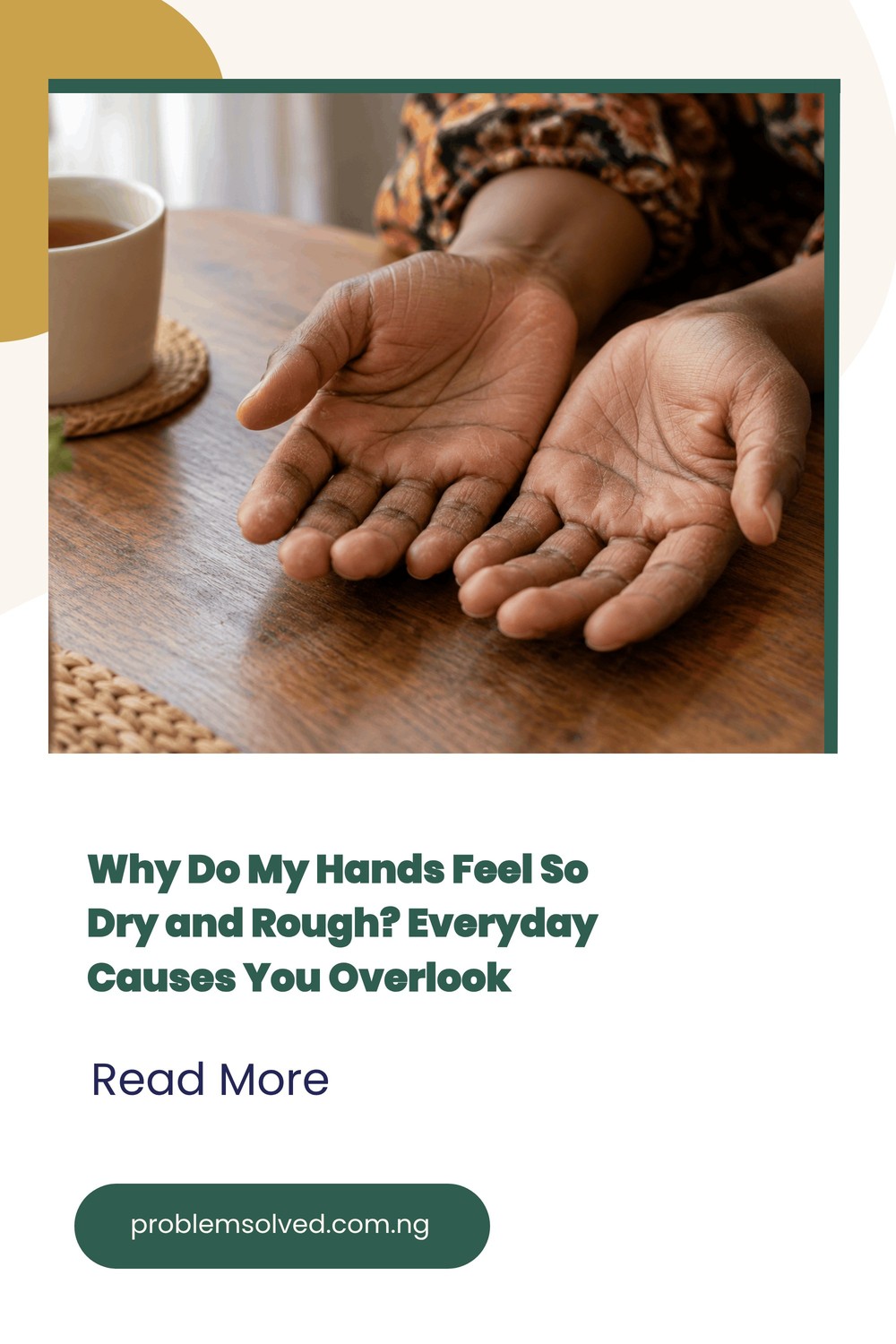
The skin on your palms has no oil glands at all, and the backs of your hands have far fewer than your face. Yet your hands are washed, wetted and handled more than almost any other part of your body. That’s why dry, rough hands are so common and why the everyday causes are easy to overlook. If you’ve been searching for dry rough hands causes, the answer often lies in what your hands come into contact with throughout the day.
Why hands dry out faster than almost any other part of the body
Your hands have less natural protection against dryness than you might expect.
The palms have thick skin designed to handle gripping, pressure and friction. They contain sweat glands but no oil-producing glands. That means your palms cannot produce the natural skin oils that help other parts of your body hold on to moisture.
The backs of your hands are different. Their skin is thinner and contains some oil glands, but far fewer than your face.
Now consider what your hands go through. Water, dust, dry air, rough surfaces and constant contact with everyday objects all affect the outer skin.
Your face doesn’t usually spend much time submerged in washing water or rubbing against wet clothes. Your hands do.
Once the protective oils on the surface are reduced, moisture escapes more easily. The skin can become tight, less flexible and rough to the touch.
Both your palms and the backs of your hands can become dry, but the reasons may not be exactly the same.
Hands, feet or both: which needs attention first?
Five quick questions to see where to start.
Loading the quiz…
How dry hands keep getting drier
One frustrating thing about dry hands is that the roughness can continue getting worse even when nothing obvious has changed.
It often happens through a repeating process.
Something removes part of the skin's natural oils. The skin loses moisture and starts feeling tight. Small rough areas develop, particularly around the fingers, knuckles and palms.
Those rough areas catch against towels, clothing and other surfaces. The additional friction disturbs the outer skin further.
Meanwhile, your normal daily activities continue exposing your hands to washing, rubbing and moisture loss.
What began as a little dryness gradually becomes a rough texture that seems to be there all the time.
This explains why you might suddenly notice that your hands feel unpleasantly rough, even though the change has been building through ordinary activities.
The causes below are some of the everyday things that start or contribute to this process. Some remove protective oils, while others increase friction or moisture loss.
Detergents and dish soap
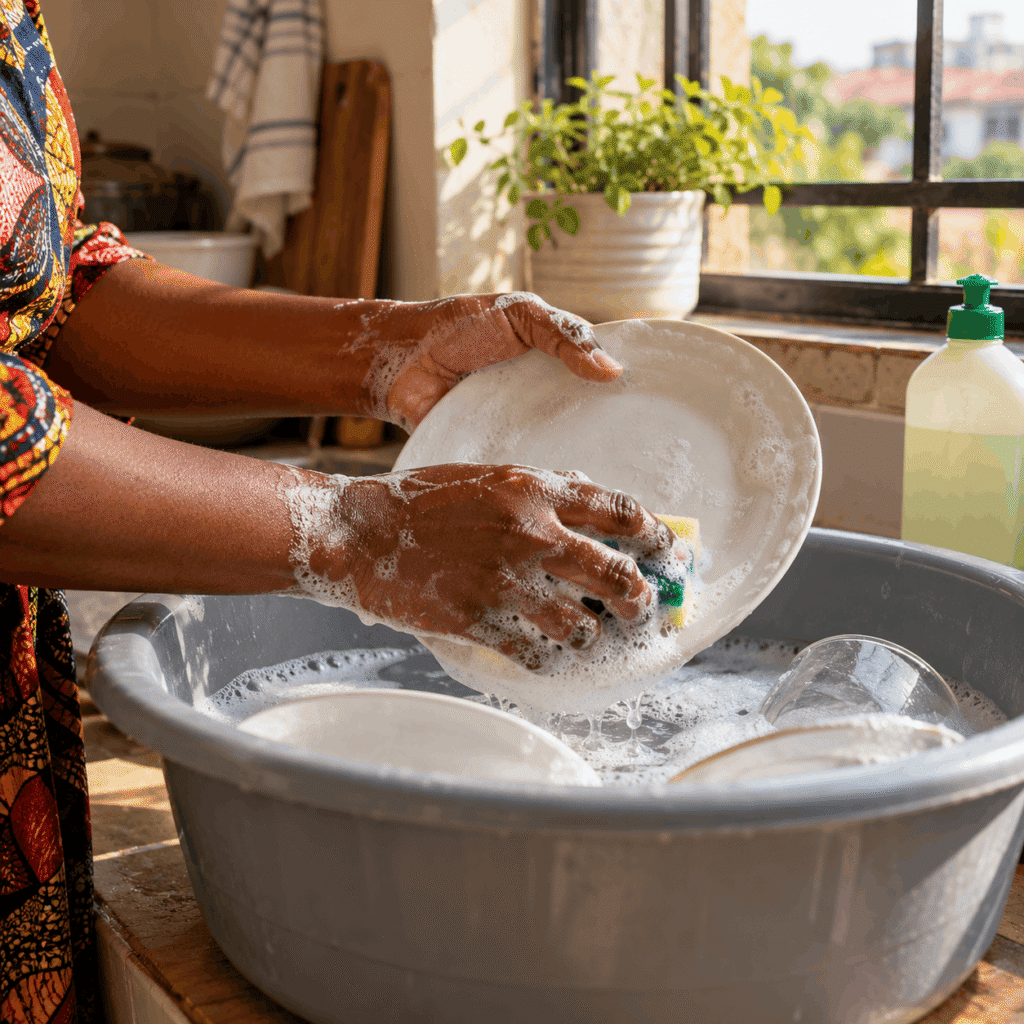
Washing powder, laundry bar soap and dishwashing liquid are designed to remove grease and dirt.
Unfortunately, the cleaning action doesn't stop at the grease on your plates or clothes. These substances can also remove the natural oils that help protect your skin.
When you're washing clothes by hand, your fingers and palms remain in contact with soapy water and wet fabric. The rubbing involved in washing adds another source of friction.
Dishwashing creates a similar exposure, especially when cleaning oily pots, plates and cooking utensils.
The effect isn't always immediately noticeable.
Your hands may feel perfectly normal while they're wet. It's only afterwards, when the water has evaporated, that the tightness becomes obvious.
With repeated contact, the outer skin can lose some of its ability to retain moisture.
This is one reason dry hands from washing can develop even when the soap doesn't cause any obvious stinging or irritation.
Hand sanitiser
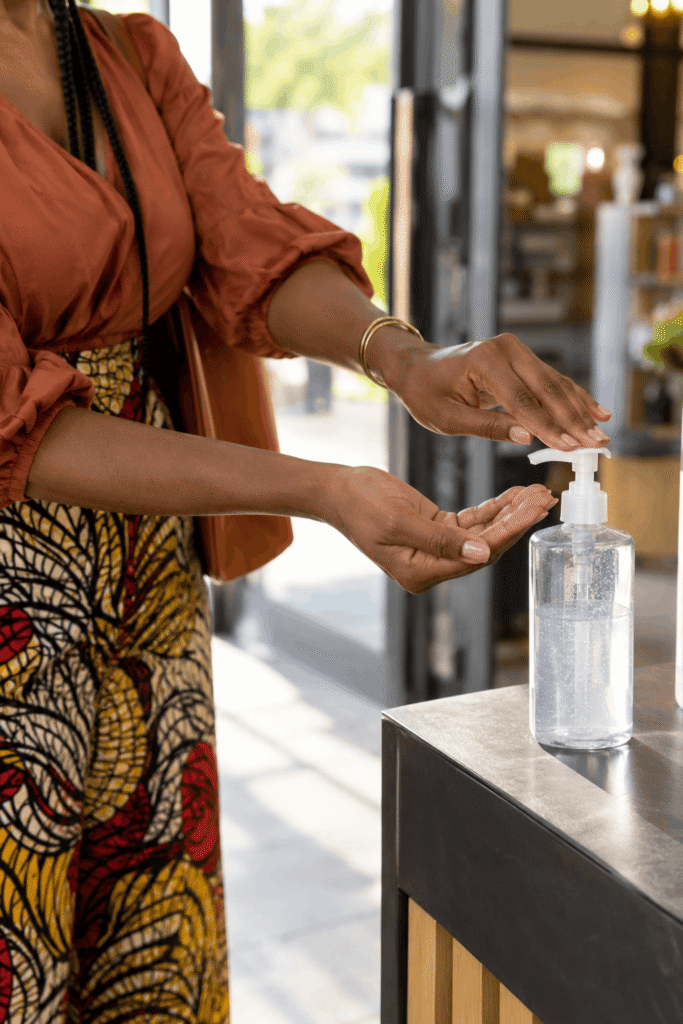
Hand sanitiser is another easily overlooked source of dryness.
Alcohol-based sanitiser evaporates quickly. During that process, it can disturb some of the protective oils on the skin's surface, particularly when your hands are already dry.
Think about how often sanitiser appears in an ordinary working day.
You might encounter it at a shop entrance, in an office, inside your car or at a workplace reception.
Each individual application may seem insignificant, but repeated exposure can contribute to moisture loss.
Some sanitisers also contain fragrance, which can irritate skin that reacts to it. Formulas with high alcohol concentrations may feel particularly drying.
Hand sanitiser dry hands complaints often involve tightness around the fingers and a rough feeling across the palms.
The discomfort may appear gradually, making it difficult to connect with something that has become such a normal part of the day.
Hot water and hard water
Water can contribute to dry hands in more than one way.
Hot water removes natural skin oils more readily than warm water. This matters because those oils help limit moisture escaping from the outer skin.
Hard water introduces another factor.
Water containing high levels of minerals, particularly calcium and magnesium, can leave deposits on the skin and affect how soap behaves during washing.
The combination may leave your hands feeling unusually tight or rough after contact with water.
Long periods of soaking create a different problem.
The outer skin absorbs water and temporarily softens. As that water evaporates, the skin can lose moisture and become less flexible.
Repeated swelling and drying also disturb the outer protective layer.
This helps explain why hands can feel rough after washing, even when there has been no obvious contact with a strong detergent.
Harmattan and air conditioning

Harmattan is one of the most familiar environmental causes of dry hands in Nigeria.
During the dry season, often between October and February, the air contains much less moisture than during the rainy season.
That low humidity encourages water to evaporate from exposed skin.
Your hands are particularly affected because they're rarely covered during normal daily activities.
You may notice tight knuckles, rough fingertips or fine dry lines across your palms.
But dry hands during Harmattan aren't caused by dust alone. The dry air itself encourages moisture loss, even when your hands look clean.
Air conditioning creates a similar problem indoors.
Offices, shops and cars with air conditioning often have lower humidity than the surrounding outdoor air. Your skin continues losing moisture while you're inside.
This also explains why habits that seem harmless during humid months may suddenly become associated with rough hands in drier weather.
The environment has changed, even when your everyday activities haven't.
Constant wet work
Some activities expose your hands to water far more than you realise.
Cooking, cleaning, laundry, market trading, hairdressing and childcare can all involve repeated contact with water or wet materials.
The problem isn't simply that your hands get wet.
The outer skin absorbs water and swells slightly. When it dries, that swelling reverses.
Repeated cycles of wetting and drying can disturb the protective layer that normally helps keep moisture inside.
Hairdressing is a good example. Washing hair brings the fingers into contact with water, shampoo and repeated rubbing.
Cooking and cleaning involve different exposures, including wet ingredients, washing water and frequent handling of utensils.
Market traders handling wet produce may experience another combination of moisture and friction.
Even childcare can involve constant handwashing and contact with damp materials.
The important distinction is that constant wet work affects the skin through repeated exposure, not necessarily through one particularly harsh substance.
This is why two people can develop similar-looking rough hands through completely different daily activities.
Where people go wrong
One common mistake is assuming that rough hands need more scrubbing.
The skin already feels uneven, so rubbing away the roughness may seem sensible. But aggressive scrubbing removes more of the outer protective layer.
What feels temporarily smoother can be followed by additional tightness and roughness because the skin has been disturbed further.
Another mistake is constantly changing products without understanding what is causing the problem.
When several things change close together, it becomes difficult to identify which exposure is responsible for the dryness.
The original cause may still be present, while new substances introduce additional irritation.
Some people blame age.
Skin does change with age, including changes in natural oil production and moisture retention. But age alone doesn't explain every rough patch on the hands.
Others describe their skin as naturally weak and assume the roughness is simply something they have to live with.
That assumption overlooks how strongly everyday activities and surroundings influence the skin.
Waiting until the surface becomes visibly split is another problem. By that stage, the outer protective layer has already been substantially disturbed, and ordinary contact may feel increasingly uncomfortable.
Hand-Wash Load Calculator
Hands get washed, sanitised and exposed to cleaning products far more than the rest of your skin. Find out how heavy the load on yours is.
Loading the calculator...
Perhaps the biggest mistake is assuming that somebody else's explanation must apply to you.
A hairdresser whose hands are repeatedly exposed to washing products and an office worker who spends the day in air conditioning may both complain about rough hands.
But their main sources of dryness may be completely different.
Even two people doing similar work can have different patterns of exposure.
Guessing wastes time because the appearance of rough skin doesn't automatically tell you what caused it.
Understanding that distinction is what separates an explanation that sounds reasonable from one that actually fits your hands.
Dry, rough hands rarely come from one thing, and what suits one set of hands can irritate another. Hands Don't Lie is written to help you find the cause behind yours.
Questions people ask about dry, rough hands
Why do my hands still feel rough even when I look after them?
The appearance of your hands doesn't always reflect the condition of their outer protective layer. Your hands can look clean and well cared for while still losing moisture through a weakened surface. Sometimes the main source of dryness is an exposure you no longer notice because it has become part of your normal day.
Why are my palms rough but the backs of my hands smooth?
Your palms have much thicker outer skin because they're designed for gripping and handling objects. Repeated pressure can cause extra skin cells to build up, forming rough or hardened areas. The backs of your hands don't usually experience the same pressure. Rough palms can therefore reflect friction and thickened skin rather than moisture loss alone.
Why do my hands peel around the fingers?
The skin around your fingers bends, stretches and rubs against objects constantly. Water can also collect around the finger creases and nail edges before evaporating. When the outer skin becomes disturbed, small sections may loosen and peel. This peeling can be more noticeable in these areas because movement continually puts stress on the surface.
Can dry, rough hands mean something else is going on?
Yes. Sometimes persistent roughness reflects irritation from something your hands regularly touch rather than ordinary environmental dryness. The location of the changes can offer useful clues, especially when only certain fingers or areas are affected. Roughness accompanied by unusual changes deserves more attention than dryness alone. If your hands crack and bleed or look red and swollen, see a doctor.
You can read about dry rough hands causes and still be unsure which explanation fits you. For dry, rough hands, Hands Don't Lie is where you can work out the cause behind your own hands rather than continuing to guess.